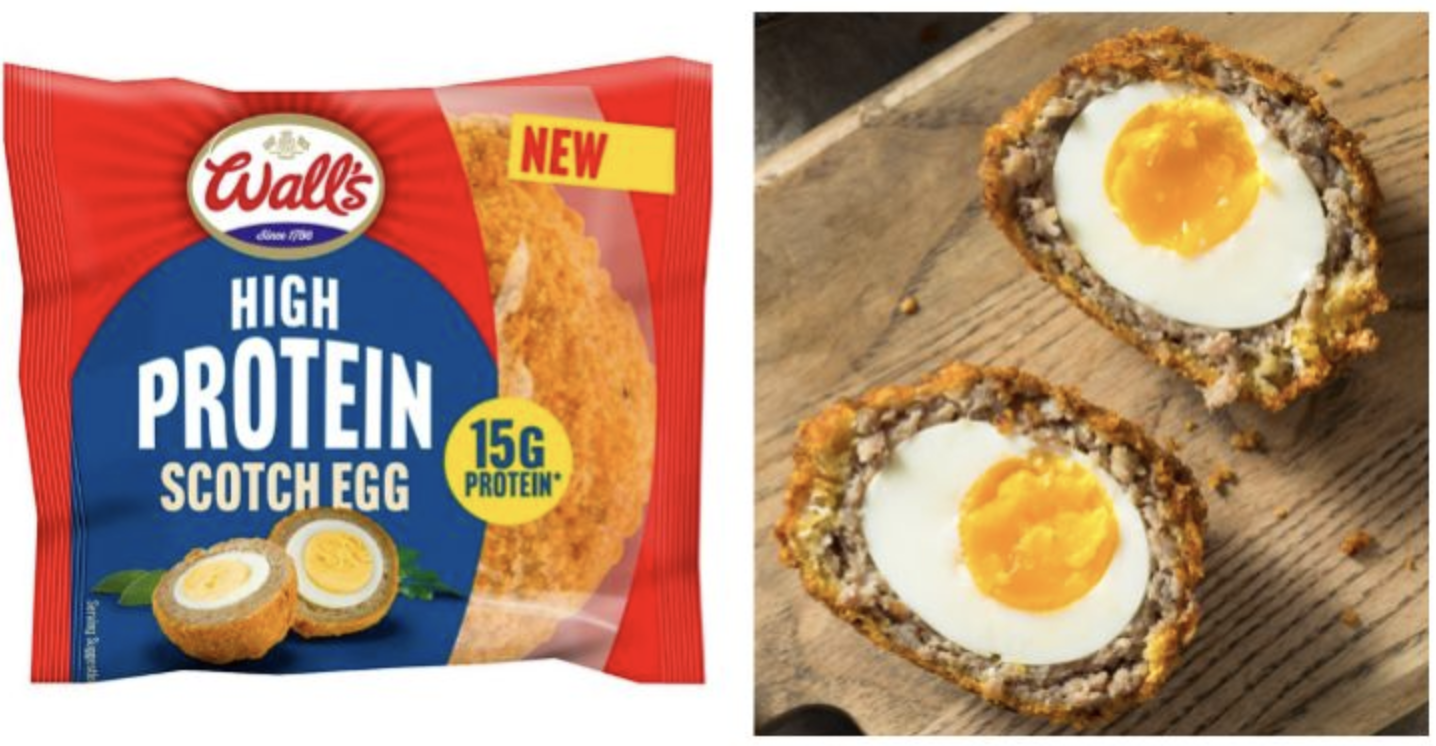
All over the world, marketers are adding a protein number to any product label they can. Take, for example, the Scotch egg, a hard-boiled egg, wrapped in pork, coated in breadcrumbs and deep-fried until crisp. Cut in half, there are concentric layers of crust, pork, then the egg white and yolk at the centre. Done well, it looks pretty good.
It was invented in London in the 18th century ("scotching" was an old word for mincing up meat, nothing to do with Scotland) as a snack food for the upper classes and for two centuries that's what it remained.
World War Two's food shortages saw a drop in quality and the Scotch egg became something you bought at a petrol station, cheap and tasting, as one writer said, "like a golf ball wrapped in sawdust".
Rebirth began in the early 2000s at high-end restaurants and gastropubs. Today the Scotch egg comes in artisanal, free-range and organic variants, livened up with spices and flavours.
Now we have the leveraging of its protein. Wall's, a UK packaged snack brand, has upped the protein in its Scotch egg from 12g to 15g and put the protein message prominently on the front of the pack.
This is a catch-up and clever marketing, not an innovation. Alongside it on the shelf there are already retailer own brands, such as Sainsbury's, with a higher protein content (about 18g), but no label claim.
The people who buy the Sainsbury's egg probably wouldn't be motivated by a big protein label. They're there for the taste (the retailer's brand is 87% egg and pork, Wall's just 66% egg and pork, plus wheat gluten and a dusting of cannellini beans).
But the Wall's protein label will get the attention of the guys browsing the grab-and-go section that's already filled with high protein claims.
A protein label on a Scotch egg is unlikely to appeal to British GLP-1 users. They are just 6% of the population and overwhelmingly women aged 30-55, living in the London area. They get their GLP-1s privately (the UK's socialised health system doesn't hand them out unless you meet a high threshold). Many of them are not even particularly overweight. And they're not big fans of either the Scotch egg (unless its organic and bought in a bijou deli in fashionable east London) or the Wall's brand.
But applause for the Wall's marketers! A lot of selling products for protein is about selling what's already there and doing that well is a skill.