
Users of GLP-1 weight-loss drugs, it turns out, spend more on groceries, not less. They eat more meat (they're big consumers of meat snacks), they're interested in low-carb and they're not particularly motivated by fibre.
These are a few of the findings in a new report from the US Meat Foundation and 210 Analytics which combines nationwide consumer surveys with Circana data from households with verified GLP-1 prescriptions.
Here are some the report's insights:
Spend more on groceries: GLP-1 households spend $10,442 a year on food & beverages, 8.8% more than other households. Even after adjusting for age and income, their meat spending stays above that of comparable households.
Prefer real food: Every plant-based meat and dairy substitute under-indexes among GLP-1 households.
Eat more red meat and poultry: everyone has heard that GLP-1 users are protein-focused. It turns out that focus is not just on dairy. 34% eat more meat and poultry more often.
A new way of eating: low-carb diets (already used by some physicians for weight-loss) almost never show up in industry discussions about GLP-1s. They should: 20% of GLP-1 users are eating low-carb, compared to just 9% of non-GLP-1 users.
Home cooking: 53% of GLP-1 users say they are cooking at home more, 62% say they are eating out less. This might help explain the increase in the size of the grocery spend. Perhaps it's foodservice that is going to be hit harder by GLP-1 usage, not grocery.
The report's authors peer-matched GLP-1 user and non-user households with the same demographics. That gives a much tighter comparison and makes it easier to see that GLP-1 households over-index not only on protein but indulgence and that fibre isn't any more interesting to them than it is for their non-GLP peers.
Of all the meats it is beef that has the strongest GLP-1 signal, with GLP-1 households over-indexing on beef compared across all age and income groups.
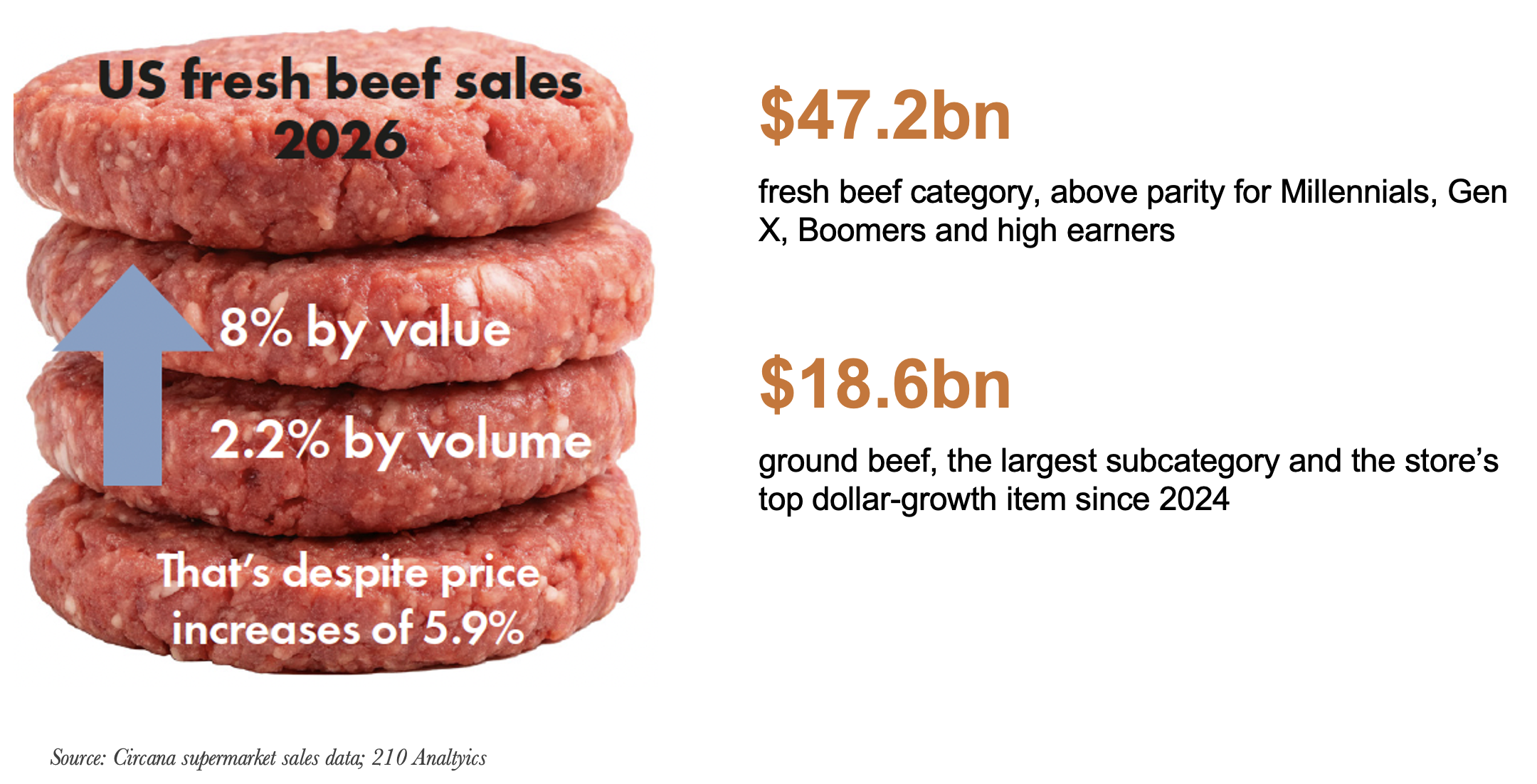
The signal is strong for ground beef, a fast-growing item in stores for three years. In the year to October 2026 sales were up 10% by value and 1.3% by volume, despite price increases. That makes sense. It's a protein that's versatile, easy to use to make small-portion meals and affordable.
Sales of all types of fresh beef have been growing for three years. In the year to October 2026, total beef sales were up 1.8% by volume and 7.1% by value, to $47.5 billion.
GLP-1 users are buying more fresh fruit and vegetables, yoghurt, cottage cheese and dairy drinks - and fresh meat.
Could it be that "real" and natural foods will be the biggest winners from the GLP-1 frenzy?
Could it be that the failing "protein transition" which university researchers and consultants said would see us all switching from meat to plant-based proteins is dead in the water, finally killed off by GLP-1?


