
The belief that there's going to be a surge in demand for food and beverage products labelled "fibre" or that consumers will be motivated to fill the mysterious "fibre gap" in their diet is based on a fundamental lack of understanding of humans and the digestive wellness market.
The tendency towards group-think based on low information gets a grip on our industry more often than it should. Recent examples include the rushes into meat substitutes and dairy alternatives. Both ended in disappointment for the companies who followed the herd. Hundreds of millions of dollars were incinerated on failed brands.
So it might be useful for companies to "think different" - as a successful entrepreneur once said - about fibre.
In most countries people are said to need to consume more fibre for health. But if you think that humans are going to be motivated by this message and that they will rush out and buy more fibre products, then I have a bran-based bridge to sell you.
In the UK, two bakery groups have just learned the hard way that fibre is not a strong primary selling message. Here's some information:
1. Fibre Fix (see below), launched by Warburtons, the UK's biggest bakery brand, was recently withdrawn after 18 months on the market. You won't be surprised to know that it's sister product - Protein - is still on the shelf.
2. Fibre Plus New York Bagels, sold in the UK by the New York Bakery, have also been discontinued after 18 months on the market. And yes, its sister product Protein Boost is still on the shelf.
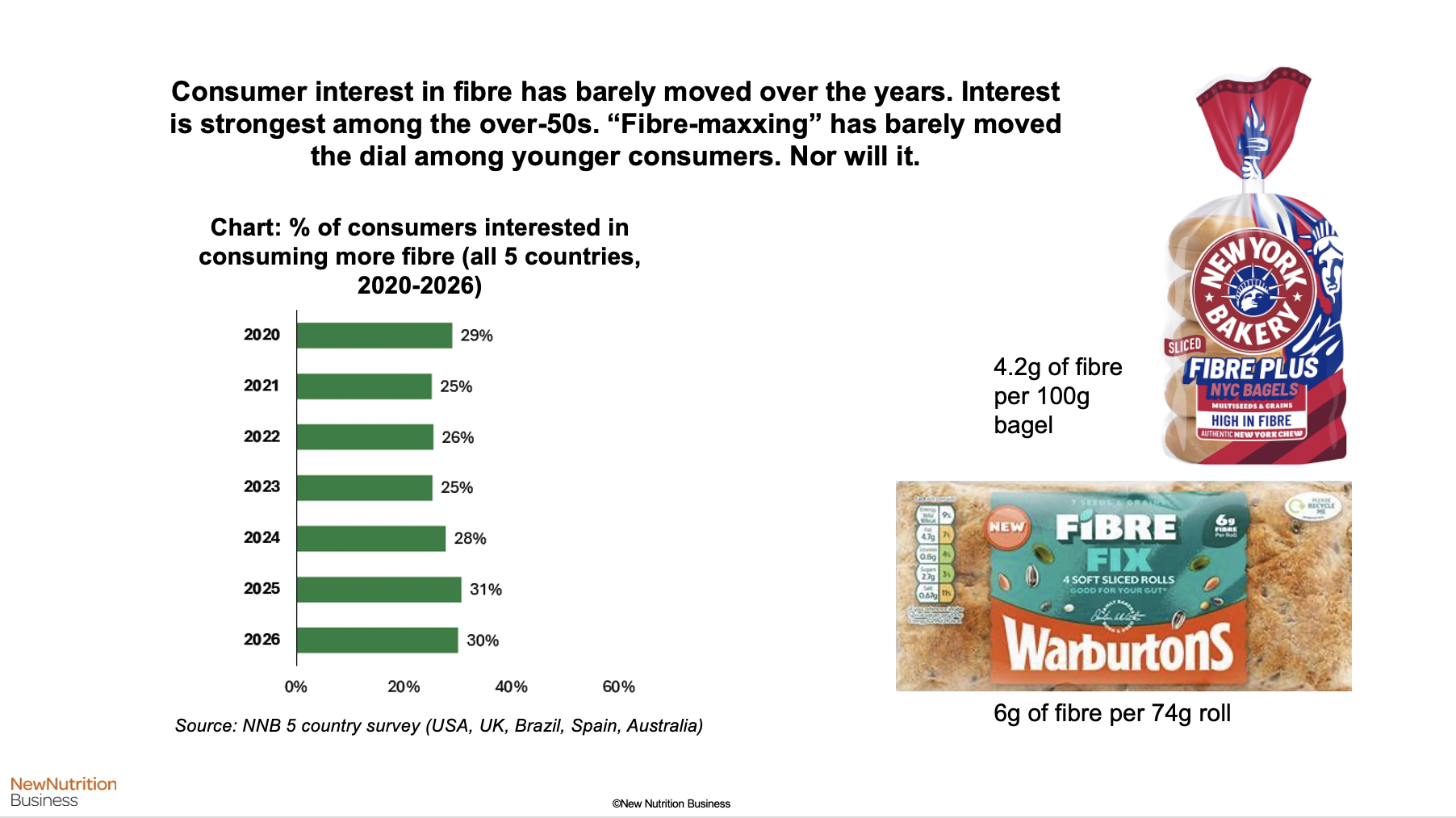
Both the above bakery products were marketed by companies that have excellent technical and marketing know-how. But people in most countries (not only the UK) just aren't massively motivated by the fibre message, as our own research has shown over the last decade (see chart below).
Humans want to solve a problem ("I want to feel better inside") and fibre is just one of many ways they try and address the problem. The many ways open to them include: yogurt with probiotics; kefir; gluten-free foods, lactose-free dairy, A2 dairy and many others. The consumer buys the one that fixes the problem and does so in the most delicious and convenient way. In the grocery store the consumer gives their verdict on how well they think fibre does those two jobs.
If you want to do something creative with fibre, great! But you need to pair it with benefits that people find more interesting than fibre. Maybe "think different" and ignore the fibre group-think.


